Pakistan-Afghanistan Border Security Intensifies as Anti-Terror Operations Rise
.png)
Pakistan’s security forces have intensified counter-militancy operations along the Afghanistan border after a reported attempt by 15 militants to cross into North Waziristan, highlighting how the Pakistan-Afghanistan frontier remains one of South Asia’s most volatile security zones. Pakistan’s military said the infiltrators were members of Tehrik-e-Taliban Pakistan (TTP), which Pakistani authorities call “Fitna al-Khawarij,” and said the confrontation lasted about 36 hours before all 15 were killed. The allegation that the group was supported by India was made by Pakistan and has been rejected by India and Afghanistan. (AP News)
The latest episode is significant because it comes after a sharp increase in militant activity inside Pakistan and a broader deterioration in relations with Afghanistan. At the same time, the violence is not confined to isolated firefights. It involves attempted infiltration, intelligence-led operations, cross-border attacks, border restrictions and disputes over whether Afghan territory is being used by armed groups against Pakistan. The result is a security environment in which tactical military operations are increasingly linked to a much larger diplomatic dispute between Islamabad and Kabul.
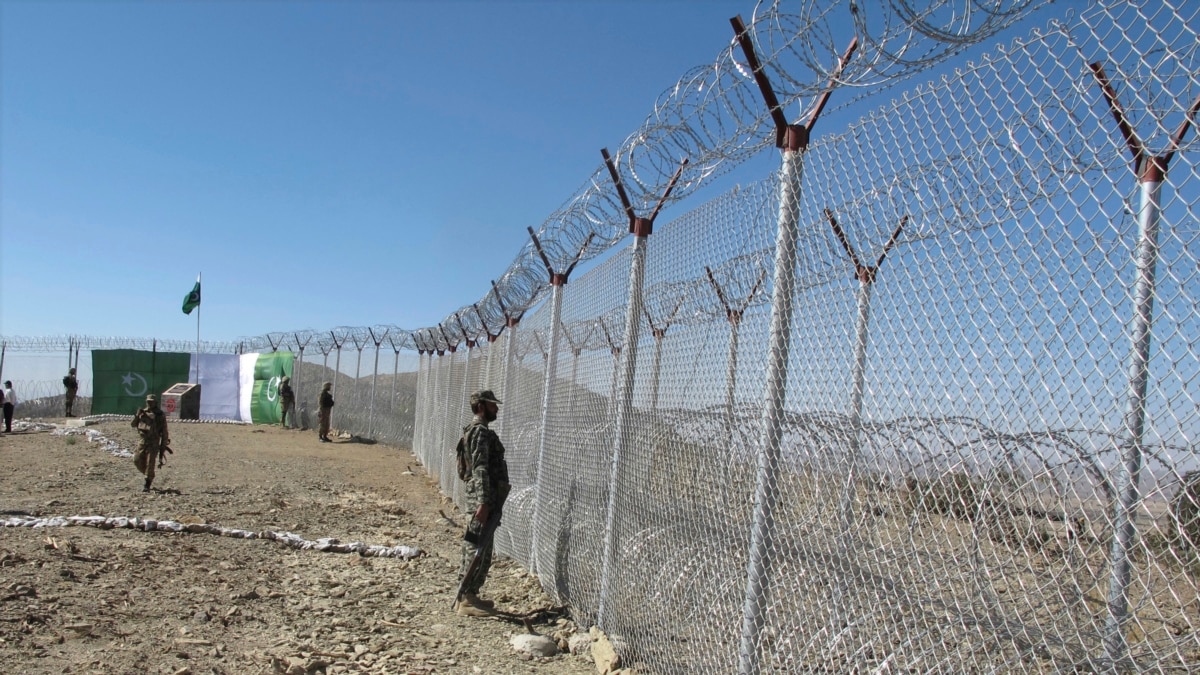

The North Waziristan Operation Signals Continuing Border Pressure
According to the Inter-Services Public Relations, the Pakistani military’s media wing, troops detected a group attempting to enter Pakistan opposite North Waziristan during the night of August 31 to September 1. Security forces then engaged the group in what the military described as a 36-hour operation. Pakistan said weapons and ammunition were recovered during a follow-up sanitization operation. (Dawn)
The incident was also reported by the Associated Press, which said the military identified the militants as TTP members and that the alleged Indian sponsorship claim had not been independently established. AP noted that there was no immediate response from Kabul or New Delhi when the report was published. (AP News)
That distinction is important for understanding the wider crisis. The killing of the 15 militants is a reported military outcome and is attributable to Pakistan’s official account. The allegations concerning outside sponsorship remain political claims rather than independently verified facts. Treating those two categories as identical would risk overstating what is actually known.
The operation nevertheless reinforces a long-running Pakistani concern: that armed groups can use the difficult terrain along the frontier to organize, move personnel and attempt attacks inside Pakistan. North Waziristan has particular strategic importance because of its location in Khyber Pakhtunkhwa and its history of militant activity.
The significance of the latest operation is therefore less about the number 15 by itself and more about what it says about the continuing contest over border control.
Pakistan’s Counter-Militancy Campaign Is Broader Than a Single Border Operation
The latest border engagement comes amid a wider increase in militant violence across Pakistan.
Data published by the Pakistan Institute for Conflict and Security Studies, an Islamabad-based security think tank, show that 199 militant attacks were recorded across Pakistan in August, compared with 144 in July. That represented an increase of 38 percent. At the same time, the number of deaths caused by militant attacks fell from 268 in July to 158 in August, while injuries fell from 216 to 181. (Picss)
Security operations also remained intense. PICSS recorded 211 deaths during security-force operations in August, including 203 militants, while 21 militants were injured and 26 suspected militants were arrested. The same assessment recorded 54 security-force deaths during the month.
The data suggest a more complicated picture than simply saying terrorism is either rising or falling. The frequency of attacks increased significantly, but the human toll from those attacks declined from the previous month. That can happen when security operations disrupt planned attacks, when militants change tactics, or when the effectiveness of individual attacks varies.
PICSS also found that tactical assaults were the most frequently recorded militant tactic in August, with 47 incidents, followed by target killings and improvised explosive device attacks. Balochistan remained the most affected province by attack volume, while Khyber Pakhtunkhwa and the former tribal areas remained major areas of concern.
This wider pattern explains why Pakistan is treating border security as part of a broader national counterterrorism strategy rather than as a narrow frontier problem.
TTP Remains at the Center of the Security Dispute
The TTP is central to the disagreement between Islamabad and Kabul.
The United Nations Security Council’s sanctions framework describes Tehrik-e-Taliban Pakistan as an armed organization rooted along the Afghanistan-Pakistan border and notes that it has carried out attacks against Pakistani military and state targets. UN monitoring has also reported that TTP activity increased during the relevant reporting period, while noting continuing disputes over the Afghan authorities’ handling of the organization. (United Nations)
Pakistan argues that TTP members and leaders have been able to operate from Afghan territory and that the Taliban authorities have failed to prevent cross-border attacks. Kabul has rejected accusations that it deliberately permits Afghan territory to be used for attacks against Pakistan.
That disagreement has become one of the biggest obstacles to improving bilateral relations.
Pakistan’s Foreign Ministry said in May that cross-border attacks and infiltration attempts had continued despite what it described as a temporary pause announced in March. Islamabad said it wanted stronger assurances from Kabul and accused Afghan authorities of failing to address the problem. Those accusations are disputed and should be understood as Pakistan’s official position.
The latest operation has now added another tactical incident to that strategic dispute.
February’s Border Fighting Changed the Security Equation
The current situation cannot be understood without the major clashes that erupted earlier in 2026.
In late February and early March, Pakistani and Afghan forces became involved in serious cross-border fighting following an escalation that included Pakistani airstrikes inside Afghanistan and retaliatory fire from the Afghan side. UNAMA documented significant civilian casualties and repeatedly called for an end to the hostilities.
Between February 26 and March 5, UNAMA recorded 185 civilian casualties in Afghanistan, including 56 deaths and 129 injuries. It said women and children made up 55 percent of those recorded casualties.
UNAMA also reported at least 28 civilians killed and 49 injured in Pakistani airstrikes on June 28 in Paktya, Paktika and Kunar provinces, including women and children. Pakistan’s Ministry of Information and Broadcasting confirmed that Pakistani security forces had conducted strikes in those provinces. (UNAMA)
These figures do not establish the broader political arguments made by either side, but they do demonstrate the consequences of allowing counter-militancy disputes to move from covert or localized activity into direct interstate confrontation.
For Pakistan, attacks against its territory create pressure for preventive or retaliatory action. For Afghanistan, Pakistani cross-border strikes create sovereignty and civilian-protection concerns. The two positions can reinforce each other, making every new militant incident more politically difficult to contain.
Border Security Is Becoming a Diplomatic Question
Pakistan’s latest military action also coincides with renewed efforts to manage relations with Kabul.
AP reported that Pakistan’s Foreign Ministry said improving bilateral relations depends on “verifiable, written assurances” from the Afghan side that its territory will not be used for terrorism against Pakistan. The statement followed a visit by Chinese envoy Yue Xiaoyong, part of efforts to reduce tensions. China previously hosted Pakistan-Afghanistan talks in Urumqi in April after fighting erupted between the two countries in February.
That diplomatic condition reveals an important change in Islamabad’s approach. Border management is no longer being treated only as a military responsibility. Pakistan increasingly wants Kabul to demonstrate that militant activity originating from Afghan territory is being actively prevented.
From Kabul’s perspective, however, the issue is more complicated. The Taliban authorities have their own internal security priorities, including pressure against Islamic State Khorasan, while they also face accusations from Pakistan over TTP activity. UN reporting has indicated that ISIL-K retains operational capabilities even while facing pressure from security operations.
This creates overlapping security problems. Afghanistan is dealing with multiple armed organizations, while Pakistan is primarily concerned with groups capable of attacking Pakistani targets. Their priorities are not identical.
The Border Fence Has Reduced Some Forms of Movement, but Not the Security Problem
Pakistan has spent years strengthening physical barriers, outposts and formal crossing points along its western frontier. The objective has been to make infiltration, smuggling and unauthorized movement more difficult.
But modern militant networks do not depend entirely on conventional border crossings. Difficult mountainous terrain, remote valleys, local networks and informal routes can still complicate border control. The continued reports of attempted infiltration demonstrate why physical barriers alone cannot resolve the problem.
This is where intelligence becomes increasingly important. A border force may stop an armed group once it detects an infiltration attempt, but preventing the next operation requires information about recruitment, movement, financing, weapons and staging areas before fighters reach the frontier.
The latest North Waziristan case illustrates that distinction. Pakistan said the militants were detected before they could establish a foothold inside the country. From a tactical perspective, early detection is precisely the outcome a layered border-security system is designed to achieve.
The challenge is maintaining that capability over a frontier that runs through some of the most difficult terrain in the region.
The Civilian Cost Adds Another Layer of Risk
Military operations may prevent attacks, but prolonged cross-border confrontation also creates risks for civilians living on both sides of the frontier.
UNAMA has repeatedly warned that armed clashes, shelling and airstrikes can cause displacement, disrupt humanitarian operations and expose civilians to serious danger. Its March assessment described a worsening humanitarian situation following the February fighting.
This matters strategically as well as morally. Sustained instability can disrupt commerce, restrict movement and weaken confidence in border crossings. Communities that depend on cross-border trade and family connections can be affected even when they are not directly involved in militant activity.
A security strategy that relies only on military pressure can therefore produce short-term tactical gains without solving the political and social conditions that allow militant networks to regenerate.
That is why border security is increasingly a combination of intelligence, policing, military operations, diplomacy, trade management and local governance.
What the Latest Escalation Means for South Asia
The consequences extend beyond the immediate Pakistan-Afghanistan relationship.
Pakistan’s western border is connected to wider regional dynamics involving China, Central Asia and India. Instability in Khyber Pakhtunkhwa and Balochistan can affect transport corridors, trade routes and investment perceptions. It also increases the security burden on a country that is already managing multiple internal and external pressures.
China has an especially strong interest in regional stability because of its economic relationship with Pakistan and its interests in surrounding countries. Beijing’s mediation efforts therefore reflect concerns that prolonged Pakistan-Afghanistan tensions could produce broader instability.
For Afghanistan, further deterioration with Pakistan could increase pressure on an economy already facing significant humanitarian and financial constraints. For Pakistan, continued militant attacks mean sustained spending on security operations and greater pressure on local communities in border provinces.
The danger is that tactical incidents begin to create strategic momentum. A single infiltration attempt can trigger a military operation; a military operation can produce political accusations; those accusations can contribute to border closures or diplomatic retaliation; and deteriorating relations can make future security cooperation more difficult.
That cycle is harder to break once it becomes institutionalized.
What Could Happen Next?
One possible scenario is continued tactical pressure without a major expansion of interstate fighting. Pakistan could maintain intelligence-led operations along high-risk sections of the frontier while seeking to limit direct clashes with Afghan security forces. Under this scenario, militant attacks may remain elevated but the two states would avoid another sustained military confrontation.
A second possibility is a new escalation caused by a major militant attack in Pakistan or another significant cross-border infiltration incident. If Islamabad concludes that Afghan territory was used directly for such an attack, political pressure for retaliatory action could rise.
A third possibility is renewed diplomacy built around verifiable border-security commitments. China, Qatar, Saudi Arabia, Türkiye and other regional actors have previously been involved in attempts to reduce tensions. Whether such efforts can succeed will depend heavily on whether Pakistan and Afghanistan can agree on mechanisms for monitoring militant activity and resolving incidents before they escalate
The most sustainable outcome would not simply be a temporary reduction in fighting. It would require mechanisms that reduce the incentive for both sides to respond militarily every time a border-security incident occurs.
The Bigger Security Test
The latest North Waziristan operation shows that Pakistan’s counter-militancy campaign remains active and that authorities are placing strong emphasis on stopping infiltration before militants can operate deeper inside the country. Pakistan’s August security data also indicate that counter-militancy operations have remained extensive even as attack numbers increased.
But tactical success cannot by itself settle the larger Pakistan-Afghanistan security dispute.
The central question is whether Islamabad and Kabul can establish a workable system in which militant groups are prevented from using border areas for attacks, while cross-border military action is minimized and civilians are better protected. The United Nations’ repeated documentation of civilian casualties shows the cost when that balance fails.
For South Asia, the immediate challenge is therefore not simply stopping the next attempted infiltration. It is preventing an accumulation of tactical confrontations from turning the Pakistan-Afghanistan border into a permanently militarized fault line. Until the two sides can combine effective counterterrorism measures with credible diplomatic mechanisms, border security will remain both a military mission and a major regional stability problem.


.png)
.png)
.png)
Comments
Post a Comment